Eliminate Cold Spots and System Failures Immediately
Is your heater failing to warm up your home correctly, or has it stopped working entirely during a chilly evening? When your furnace or heat pump malfunctions, you need fast, reliable heating services that restore warmth and comfort to your household in San Ramon without delay. Contact us immediately to dispatch a technician or inquire about available financing options for major repairs.
We provide the following outcomes for every service call:
- Rapid response teams ready to troubleshoot and resolve your heating emergencies efficiently.
- Expert diagnostics and repairs that ensure specific, cost-effective solutions rather than unnecessary upsells.
- Implementation of advanced technology for efficient heating, effectively reducing long-term energy costs.
- All services are fully licensed and insured with up-front transparent pricing and comprehensive warranties on parts and labor.
What to Expect From a Professional Heating Service Visit
When a heating system fails, the immediate priority is accurate identification of the fault. Homeowners often notice symptoms like inconsistent airflow, strange banging noises, or a pilot light that refuses to stay lit. However, the root cause is often buried deep within the mechanical or electrical components of the unit. A professional service call focuses on isolating these variables quickly to prevent further damage to the system or safety hazards within the home.
Upon arrival, a technician evaluates the entire heating envelope. This includes checking the thermostat communication, inspecting the heat exchanger for cracks, and testing the blower motor for proper amperage. In San Ramon, where winter temperatures can dip into the mid-30s, a functioning system is not just about comfort but also about maintaining a healthy indoor environment free from excess moisture and chill.
Key components inspected during a standard service visit include:
- Ignition Systems: Whether it is a standing pilot, intermittent pilot, or hot surface igniter, this is the most common point of failure.
- Airflow Restrictions: Clogged filters or blocked returns can cause the limit switch to trip, shutting down the furnace to prevent overheating.
- Electrical Connections: Loose wiring or corroded contacts often mimic major mechanical failures but require precise electrical troubleshooting to fix.
- Safety Controls: Testing the thermocouple, pressure switches, and flame sensors ensures the unit operates safely without risk of gas leaks or carbon monoxide buildup.
The Step-by-Step Repair Process
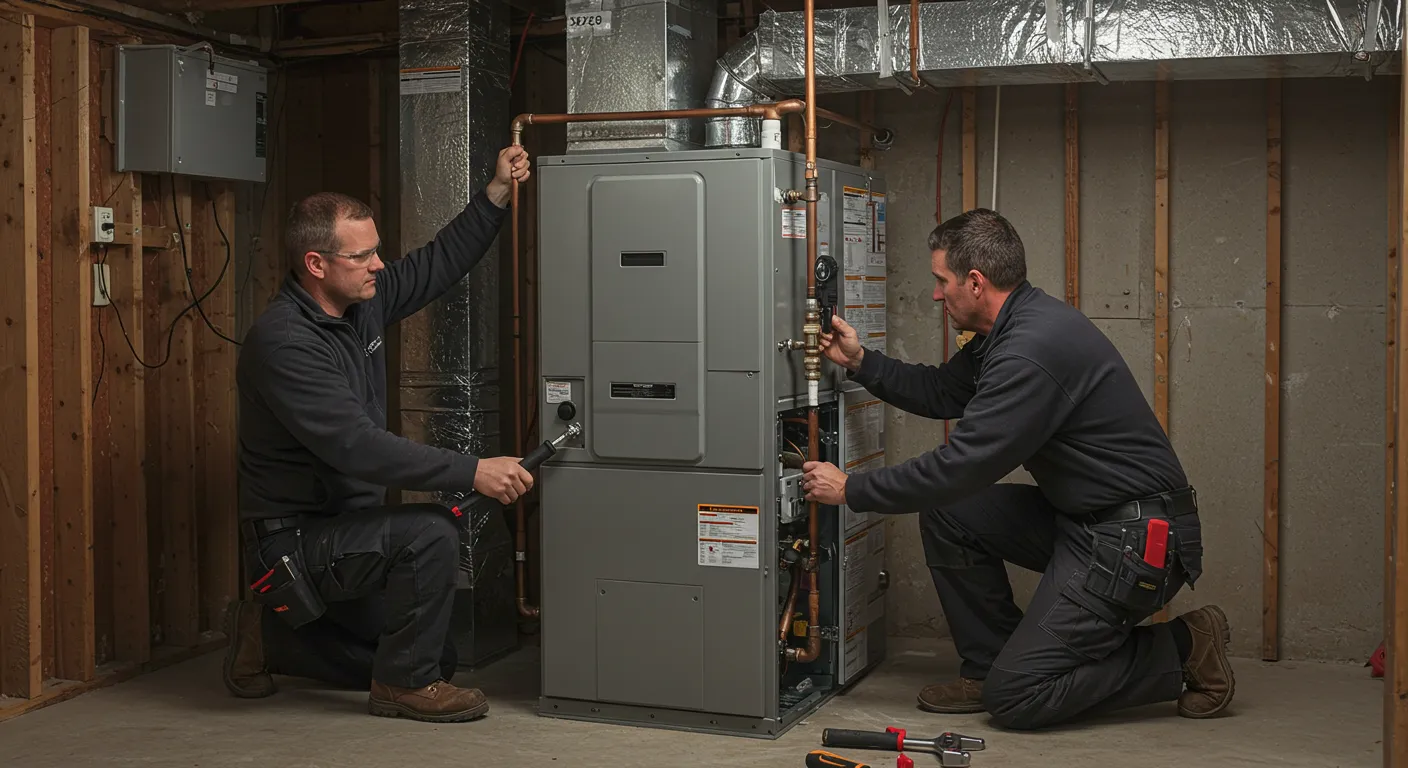
Understanding the repair workflow helps homeowners prepare for the service visit and eliminates the anxiety of the unknown. We operate with a structured approach to ensure no detail is overlooked and that the heating system is returned to optimal performance as quickly as possible:
Initial Assessment and Safety Check:
The technician begins by turning off power to the unit and performing a visual inspection. This step identifies obvious signs of wear, soot buildup, or water leaks that might indicate a compromised system.
Diagnostic Testing:
Using specialized multimeters and manometers, the technician measures gas pressure and electrical voltage. This data highlights exactly where the breakdown occurred, differentiating between a faulty control board and a simple sensor error.
Clear Explanation and Quoting:
Before any wrench is turned, you receive a detailed explanation of the problem and a flat-rate quote for the repair. This ensures there are no surprise fees on the final invoice.
Execution of Repairs:
The technician replaces the faulty component using high-quality parts. This phase may involve cleaning the burners, replacing a capacitor, or recalibrating the blower assembly.
System Verification:
Finally, the system is cycled through a full heating run. The technician measures the temperature rise—the difference between the air entering the return and the air leaving the supply—to ensure it falls within the manufacturer’s specified range.
Deciding When to Replace Instead of Repair
One of the most difficult decisions for a homeowner is knowing when to stop pouring money into an aging unit and invest in a new system. While repair is often the most immediate and cost-effective solution, there are mathematical and practical tipping points where replacement becomes the smarter financial move.
Consider replacement if the cost of the repair approaches 50% of the value of the system. Additionally, if the equipment is over 15 years old, it has likely surpassed its expected lifespan. Older units often operate at 60% to 70% AFUE (Annual Fuel Utilization Efficiency), meaning 30 to 40 cents of every dollar spent on gas is wasted. Modern systems available to San Ramon residents can reach upwards of 96% efficiency, drastically lowering monthly utility bills.
Evaluate these factors when making your decision:
- Frequency of Breakdowns: If you have required repairs more than twice in the last two years, the system is becoming unreliable.
- Rising Energy Bills: A sudden spike in gas or electric costs without a change in usage often indicates internal wear that cannot be fixed by simple repairs.
- Comfort Issues: Uneven heating, where some rooms are hot and others are freezing, suggests the system can no longer distribute air effectively or the heat exchanger has failed.
- Noise Levels: Excessive rattling, humming, or squealing usually points to a failing blower motor or inducer draft motor, which are expensive repairs on older units.
Installation of High-Efficiency Heating Systems
If the decision is made to replace the unit, the installation process is critical. The longevity and efficiency of a new heater are determined almost entirely by the quality of the installation. A unit that is improperly sized or poorly connected to the ductwork will suffer from short cycling, reducing its lifespan and failing to provide consistent comfort.
The installation process adheres to strict technical standards:
- Load Calculation: We do not simply install a unit of the same size as the previous one. A Manual J load calculation is performed to determine the exact heating requirements of the home based on square footage, insulation levels, and window orientation.
- Ductwork Inspection: Existing ducts are checked for leaks and proper sizing. Leaky ducts can result in a loss of up to 30% of conditioned air before it reaches the living space.
- System Placement: Jims Air Systems ensures the unit is leveled and isolated to minimize vibration noise. Proper clearance is maintained for future serviceability and safety.
- Venting and Drainage: For high-efficiency condensing furnaces, specific PVC venting and condensate drainage lines must be installed to handle the acidic water byproduct produced during combustion.
- Thermostat Integration: New systems often require updated thermostats to handle two-stage or modulating heat output. We ensure the control interface is user-friendly and fully programmed.
Navigating Local Utilities and Climate Factors
Operating a heating system in the East Bay requires specific attention to local climate patterns and utility regulations. While the summers are dry and warm, the winters bring a shift to a Mediterranean climate characterized by rainfall and humidity. From November through March, moisture management becomes a significant factor in indoor air quality. A properly functioning furnace helps reduce indoor humidity levels, preventing mold growth and condensation on windows.
Furthermore, dealing with local utilities like PG&E involves understanding available rebates and tiered rate structures. High-efficiency systems often qualify for local government energy conservation incentives or utility rebates, which can significantly offset the initial installation cost.
Local considerations include:
- Permitting and Codes: Any significant alteration to the heating system, including replacement, requires adherence to California’s Title 24 energy standards. This includes testing duct sealing and verifying proper refrigerant charge (for heat pumps).
- Gas Line Safety: Given the seismic activity in the region, ensuring flexible gas connectors and proper shut-off valves are code-compliant is a mandatory safety check during any service or installation.
- Electrical Upgrades: shifting from a gas furnace to a dual-fuel system or electric heat pump may require upgrades to the home’s electrical panel to handle the increased amperage load.
Ensuring Long-Term Performance and Safety
The reliability of your heating system is directly tied to the maintenance it receives. Beyond emergency repairs, proactive care prevents the vast majority of winter breakdowns. A neglected system works harder to push air through dirty filters and corroded burners, leading to overheating and premature component failure.
Safety is paramount. Gas furnaces involve combustion, which produces carbon monoxide. A cracked heat exchanger or a blocked flue pipe can cause this odorless, deadly gas to leak into the living space. Regular professional service includes rigorous carbon monoxide testing to ensure the combustion process is completely sealed and vented outdoors.
We focus on the following maintenance tasks to prolong system life:
- Lubrication: Moving parts like fan motors and bearings cause friction. Lack of lubrication increases electricity usage and can cause motors to burn out.
- Burner Cleaning: Sediment and soot on burners result in improper combustion, reducing heat output and wasting fuel.
- Sensor Calibration: Ensuring the thermostat reads the temperature accurately prevents the system from running longer than necessary.
Why Professional Service Matters
Choosing the right service provider means looking for technical expertise rather than flashy marketing. You need technicians who understand the specific heating loads required for homes in the valley and the hills. We prioritize technical training and equipping our team with the parts needed to solve problems on the first visit whenever possible.
We do not cut corners on diagnostics. If a part has failed, we investigate why it failed rather than just swapping it out. For example, a failed blower motor might be a symptom of undersized return ducts. replacing the motor without addressing the airflow issue guarantees the new motor will fail prematurely as well. This depth of service protects your investment and ensures your home remains warm throughout the wet, chilly months.
Secure Your Comfort Today
A failing heater is more than an inconvenience; it disrupts your daily life and can pose safety risks to your home. Whether you are dealing with a minor noise, a complete system shutdown, or high energy bills that don't make sense, you need a solution that is fast, accurate, and permanent.
Don't wait until the temperature drops further or the system fails completely. Jims Air Systems is ready to diagnose the issue, explain your options clearly, and restore reliable heat to your home.
Take control of your home’s climate now—schedule your service visit today.

Your Trusted Local AC Experts
When the summer heat hits, you need an air conditioning system you can rely on. At Jim's Air Systems, we specialize in keeping your home cool and comfortable. Whether you need an emergency repair, a seasonal tune-up, or a brand new high-efficiency air conditioner, our family is here to help.
Our Air Conditioning Services include

AC Repair
We service all makes and models, quickly diagnosing and fixing any issue.
AC Installation & Replacement
Get a perfectly sized, high-efficiency system with our owner-led design and installation process.
AC Maintenance
Prevent breakdowns and improve efficiency with our comprehensive AC tune-ups.
Signs You Needs AC Service
.svg)
Ready for a Cooler, More Comfortable Home?
Whether you need an emergency repair or a free estimate on a new, energy-efficient air conditioner, our family is ready to provide honest advice and expert service. Contact us today!